What Are Kilts Made Of? Fabrics, Weights and What’s Inside

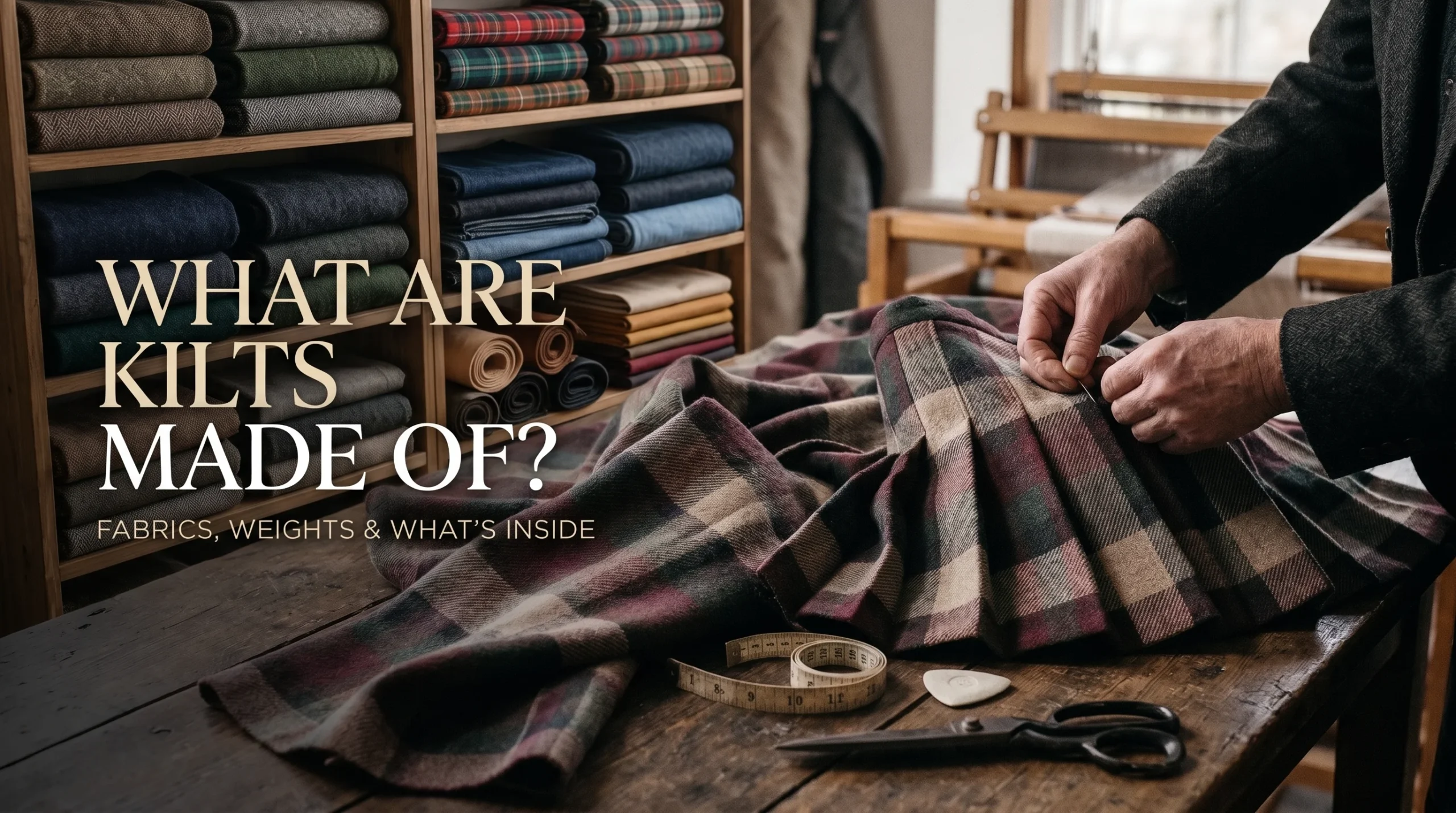
That’s the classic Highland kilt. Modern kilts also come in acrylic, polyviscose, cotton, denim, leather and tweed. Each one changes how the kilt looks, hangs, feels in the heat and how you wash it, so it’s worth knowing what you’re paying for before you buy.
Table of contents
The Traditional Fabric: Worsted Wool
The kilt you see at a Highland games or a Scottish wedding is made from twill-woven worsted wool. Both words describe how the cloth is made.
Worsted means the wool fibres are combed straight before they’re spun. That gives a smooth, strong yarn and a crisp cloth that holds a sharp pleat. Woollen cloth, made from fibres that aren’t combed, feels softer and fuzzier and is used more for tweed.
Twill is the weave. Kilt cloth uses a 2/2 twill, where each cross thread passes over two threads and then under two. It makes the fine diagonal lines you can see in tartan if you look closely, and it’s what lets the stripes meet cleanly at the corners of each check. Our guide to tartan fabric goes deeper into the weave and the yarn.
Wool became the kilt cloth for practical reasons. It’s warm when it’s wet, it shrugs off light rain, it breathes, and it springs back into shape. A good wool kilt can last a lifetime, and many are handed down.
Fabric Weight: What the Ounces Mean
Kilt cloth is sold by weight, given in ounces per yard. The higher the number, the thicker and heavier the cloth.
Light (10 to 11 oz). Used for Highland dancers and for warm weather. It’s cooler and easier to move in, but it doesn’t swing as much.
Medium (13 oz). A good all-round choice. It’s one of the two most common kilt weights and suits most people who wear a kilt a few times a year.
Heavy (16 oz). The other common weight and the classic choice for a full 8-yard kilt. It holds deep pleats, keeps you warm and gives that heavy swing when you walk.
Regimental (18 to 22 oz). Very heavy cloth, mostly used for military and pipe band kilts.
If you live somewhere hot or plan to dance, go lighter. If you want the traditional look for weddings and formal events, 13 or 16 oz is the safe bet.
Traditional Tartan Kilts
These tartan kilts are the ones our customers pick most often for weddings and formal wear.

Premium Quality Heritage of Scotland Tartan Kilt Design 18
Original price was: 166,44 $.127,02 $Current price is: 127,02 $.
Black Watch Custom Made Tartan Kilt-Design 3
Original price was: 217,54 $.173,74 $Current price is: 173,74 $.
Premium Quality Black Watch Tartan Kilts Design 32
Original price was: 217,54 $.173,74 $Current price is: 173,74 $.How Much Fabric Goes Into a Kilt
A lot more than you’d guess. A full traditional kilt uses about 8 yards of single-width tartan, which is just over 7 metres. Single-width cloth is about 26 to 30 inches wide. Some kiltmakers use double-width cloth instead, about 54 to 60 inches wide, and need 3 to 4 yards of it.
Almost all of that fabric disappears into the pleats at the back. An average man’s kilt has 25 to 34 pleats, depending on his size and the size of the tartan’s repeat (the sett). The front is two flat layers called aprons.
You’ll also see 4-yard and 5-yard kilts. They use less cloth, so the pleats are wider and shallower, and the kilt is lighter and cheaper. They’re a fair choice for summer or casual wear, but they won’t have the same weight and swing as an 8-yard kilt. If you want to see how the pleats are laid out, our guide to wearing a kilt shows how the aprons and pleats sit on the body.
What’s Inside a Kilt
The tartan is only part of it. Turn a traditional kilt inside out and you’ll find several hidden parts that keep it in shape.
Canvas interfacing. A strip of stiff canvas is sewn inside the top of the kilt, behind the pleats and aprons. It stops the cloth stretching when you pull the straps tight and keeps the waist firm. Cheaper kilts often leave it out, which is one reason they lose their shape faster.
Lining. A lining, often cotton, covers the inside of the waist area and the canvas. It protects the stitching and makes the kilt more comfortable against your shirt.
Straps and buckles. Most kilts close with three leather straps and metal buckles: two on the right hip and one on the left, holding the inner apron. The straps have several holes so you can adjust the fit. There’s no zip.
Belt loops. Many kilts have two loops at the back. Despite the name, they’re there to hold the sporran chain or strap in place more than the kilt belt.
Fringe and selvedge. The edge of the outer apron usually has a fringe. The bottom edge is the finished edge of the cloth (the selvedge), so a traditional kilt isn’t hemmed.
The sett also has to line up through every pleat so the back reads as the same pattern as the front. That’s slow, skilled work, and it’s a big part of why a hand-sewn wool kilt costs what it does.
Other Kilt Materials
Since the late 1990s, kilts have been made from far more than wool. Here are the ones you’ll come across most.
Acrylic. A synthetic fibre that’s made to look like wool. Acrylic kilts are the cheapest way into a tartan kilt, they come in hundreds of tartans and they’re easy to look after. They don’t breathe as well as wool, and after a lot of wear the cloth can pill (form little fuzz balls), especially where a sporran rubs the apron.
Polyviscose. A blend of polyester and viscose, often called PV. It’s lighter than wool, resists creasing, holds a pleat well and is cheaper than wool. Many kilt sellers rate it above acrylic for colour and drape, and it’s a good pick for travel, pipe bands and regular wear. Some kiltmakers offer polyviscose kilts with tartan straps instead of leather, so the whole kilt has no animal products.
Cotton and canvas. The usual cloth for utility kilts, which add cargo pockets and are made for work, festivals and everyday wear. They’re cool, tough and easy to wash. We explain how they differ from tartan kilts in our kilt vs utility kilt guide.
Denim. Hard-wearing and casual. A denim kilt is built for daily wear rather than formal Highland dress.
Leather. Heavy, striking and more of a fashion or biker piece than a traditional one. Leather kilts are warm and last for years, but they’re not for hot days.
Tweed. A thick woollen cloth with a rougher, country look. Tweed kilts suit autumn and winter, daytime events and outdoor wear.
Others. You’ll also see corduroy, PVC and cotton-polyester blends, mostly in fashion and gothic styles.
Utility Kilts in Cotton and Canvas
Tough, washable kilts with pockets, made for everyday wear.
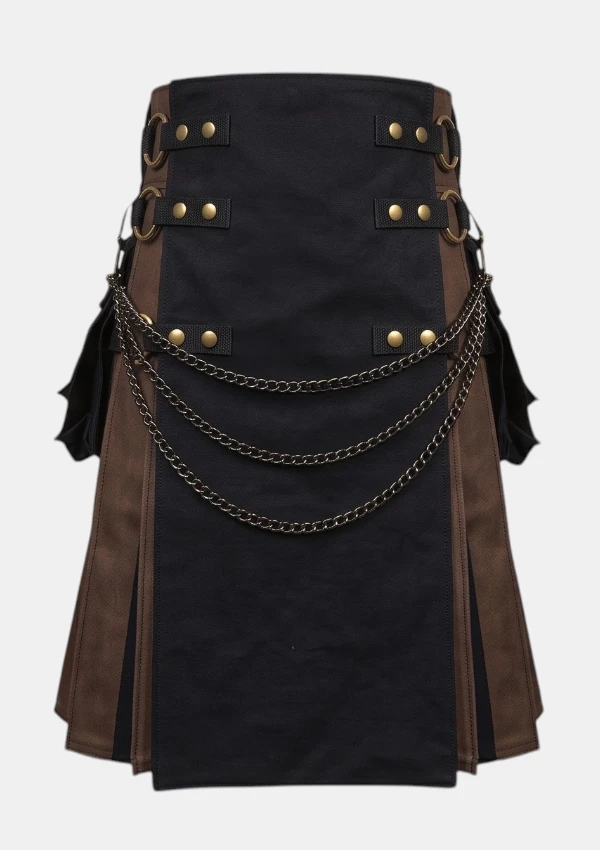
Scottish Black & Brown Fashion Hybrid Utility Kilt Design 20
Original price was: 217,54 $.173,74 $Current price is: 173,74 $.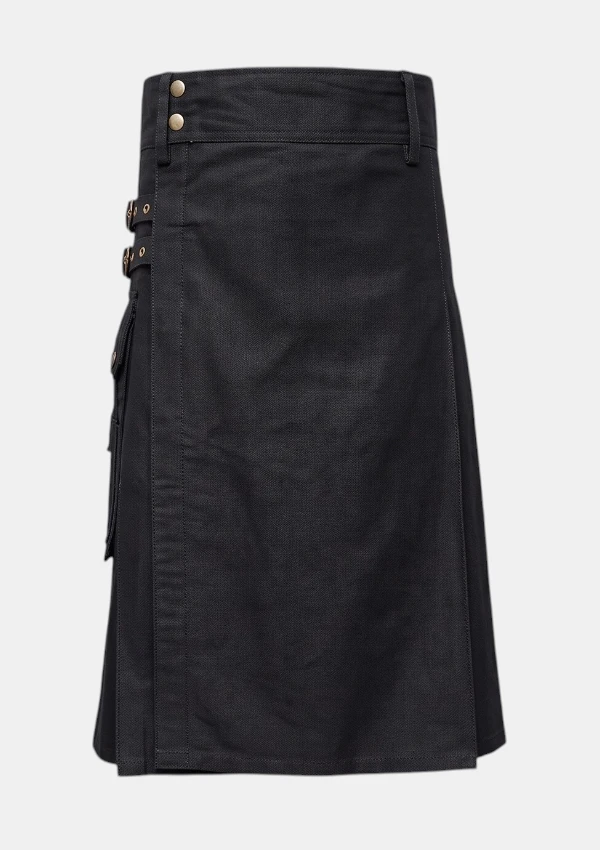
Black Utility Kilt With Strap And Adjustable Brass Snaps Design 76
Original price was: 217,54 $.173,74 $Current price is: 173,74 $.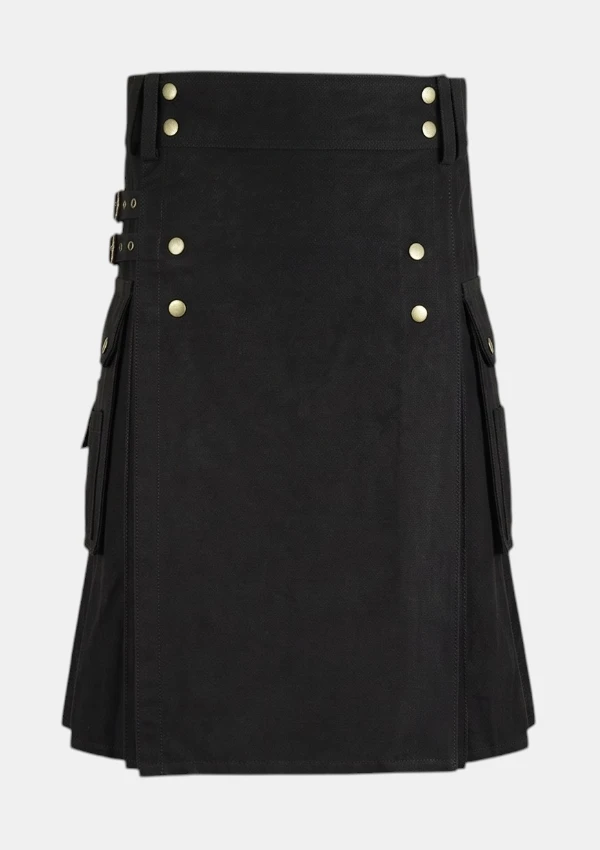
Black Cotton Utility Kilt with Brass Buttons – Design 13
Original price was: 217,54 $.173,74 $Current price is: 173,74 $.Which Material Should You Choose?
Start with where you’ll wear it.
For a wedding, Burns Night or any formal event, a wool tartan kilt in 13 or 16 oz cloth looks and moves the way a kilt should. If wool is out of budget, polyviscose is the closest substitute.
For travel, hot weather or a pipe band that wears its kilts often, polyviscose or a lighter wool is easier to live with.
For work, camping, festivals or just wearing a kilt on a normal day, go for a cotton utility kilt or denim. You can throw them in the wash and you won’t worry about spills.
If you want something warm with a country feel, try tweed. For a bold fashion statement, leather.
Whatever you choose, the fit matters more than the fabric. A cheap kilt that fits well will look better than an expensive one that doesn’t. Our kilt size guide shows how to measure your waist, hips and length before you order.
Care depends on the material too. Wool kilts are usually dry cleaned and pressed by a professional when the pleats need it. Many polyviscose, acrylic and cotton kilts can be washed gently at home, but always follow the care label on your kilt.
What Are Kilts Made Of? FAQ
How many yards of fabric are in a kilt? A full traditional kilt uses about 8 yards of single-width tartan, or 3 to 4 yards of double-width cloth. Lighter kilts use 4 or 5 yards.
What weight of wool is best for a kilt? 13 oz and 16 oz are the most common weights. Choose 16 oz for a heavy, traditional kilt, 13 oz for an all-round kilt and 10 to 11 oz for dancing or warm weather.
Is an acrylic kilt as good as a wool kilt? Acrylic is cheaper and easier to care for, but it doesn’t breathe like wool and can pill with heavy wear. Wool lasts longer and hangs better. Polyviscose sits between the two.
What is polyviscose in a kilt? Polyviscose is a blend of polyester and viscose. It looks similar to wool, holds pleats well, resists creases and costs less, which makes it popular for travel and regular wear.
Can you wash a kilt? Wool kilts are usually dry cleaned. Many polyviscose, acrylic and cotton kilts can be washed gently, but check the care label first.
Ready to find your kilt? Browse our tartan kilts or find your family colours with the tartan finder.