How to Wear a Kilt: A Step-by-Step Guide

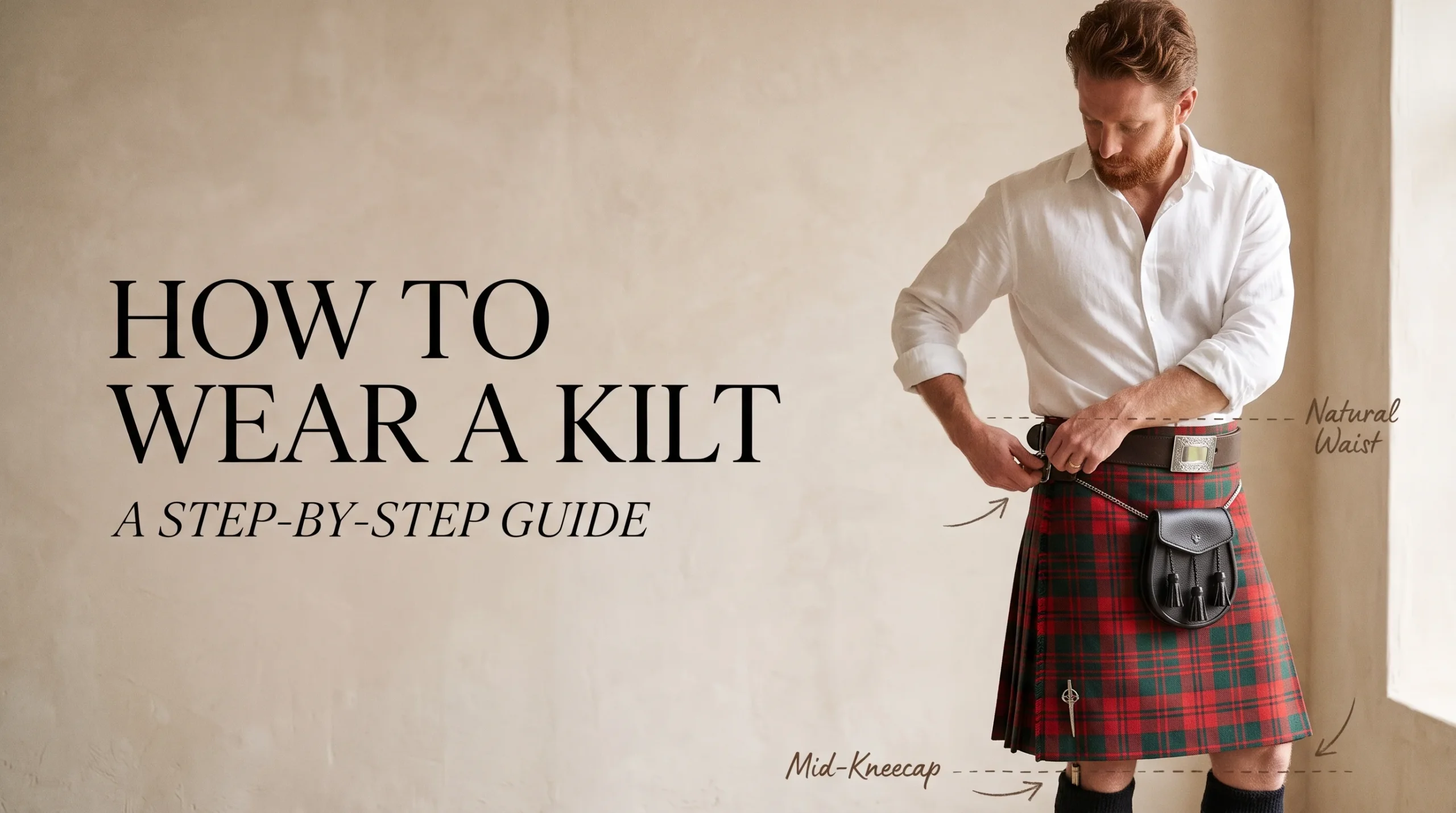
Table of contents
Before You Start
Most problems with a kilt come from the size, not the way it’s worn. A kilt is measured at the natural waist, which is higher than where your jeans sit. If you ordered it using your trouser size, it will slip down to your hips and hang too long.
Check two numbers before your first outing: your waist, measured around your navel, and the length from that point to the middle of your kneecap. Our kilt size guide shows exactly where to put the tape, and our FAQs answer the usual ordering questions.
Lay everything out in the order you’ll put it on: shirt, kilt, belt, socks with flashes, sporran, shoes, then jacket. If you’re new to the parts of a kilt, the apron is the flat front and the pleats are the folds at the back.
How to Put On a Kilt, Step by Step
These steps work for a traditional tartan kilt with straps and buckles. A casual kilt or utility kilt closes the same way, though some use snaps instead of buckles.
- Put your shirt on first. Tuck it in after the kilt is fastened, not before, so it doesn’t bunch.
- Hold the kilt behind you. The pleats go at the back and the two flat aprons meet at the front.
- Fasten the inner apron. This is the apron that goes underneath. Bring it across your front and feed its strap through the small slot on the left side of the kilt, then buckle it on the outside. This strap is what holds the kilt up, so make it snug.
- Cross the outer apron over. Bring the top apron across to your right and fasten it with the straps on your right hip. Pull both straps to the same tightness so the apron lies flat.
- Check the height. The top of the kilt should sit at your natural waist, about an inch or two above your belly button. If it sits on your hips, it’s too low.
- Line it up. The fringe of the outer apron should sit on your right side, running straight down. On many tartans there’s a strong stripe near the middle of the apron. Center that over your shirt buttons.
- Smooth your shirt. Pull it down gently from inside the waistband so there are no folds sticking out at the back.
The kilt should feel firm, like a belt that’s done up properly. You should be able to slide a flat hand inside the waistband, but it shouldn’t move when you walk.
Where Everything Should Sit
Getting the heights right is what makes a kilt look tailored. These are the measurements Highland outfitters and pipe bands use.
Waistband: At your natural waist, just below the ribs and above the belly button. Higher than most people expect.
Hem: At the middle of your kneecap. A quick test is to kneel on the floor. The hem should just touch it.
Belt: Optional, but standard with a jacket. It goes over the kilt straps at the top of the waistband, with the buckle centered on the apron. Keep it firm, but not so tight that it creases the cloth. Our kilt belts and buckles come in plain leather for day wear and with Celtic buckles for evening.
Kilt pin: On the outer apron only, about 4 inches up from the hem and 3 inches in from the fringe edge. Never push it through both aprons, or it will pull the kilt tight and can tear the cloth when you sit. A kilt pin is decoration and a little weight, not a fastener.
Sporran: Centered on the front, about a hand’s width below the belt. Too low and it swings against your legs. Too high and it pushes the apron up. Adjust it with the chain or strap that goes around your waist. If you don’t have one yet, a plain leather sporran works for both casual and smart outfits.
Kilt hose: Pull the socks up over the knee, then fold the top down so the turnover sits two to three fingers below the kneecap. Both legs should match.
Flashes: The small garter tabs, or kilt flashes, go on the outside of each leg, under the folded top, with the same length showing on both sides. Many kilt socks come with matching flashes.
Sgian dubh: The small knife goes in the top of your right sock if you’re right-handed, on the outer side, with only the top of the handle showing. Left-handed wearers put it in the left sock. Check local laws before carrying one in public or through security.
Kilt Accessories
These are the kilt accessories most people add first.


Casual or Formal: What Changes
The kilt goes on the same way for every occasion. What changes is everything around it.
For a casual day, keep it simple. A T-shirt, polo or ghillie shirt works, with ankle boots or plain leather shoes and short socks or boot socks. A leather day sporran is enough, and you can skip the belt and the flashes. This is how most people wear a kilt at Highland games and festivals.
For a wedding, ceilidh or dinner, you’ll want a full outfit: a kilt jacket and waistcoat, a white shirt with a tie or bow tie, a dress or semi-dress sporran, kilt hose with flashes, and ghillie brogues. The jacket decides how formal you look. An Argyle jacket suits daytime weddings, and a Prince Charlie jacket with a bow tie is the evening and black-tie choice. Browse our kilt outfits if you’d rather get everything matched in one go.
Ghillie brogues have long laces that wrap around the ankle. Cross the laces over the top of the foot, twist them a few times, wrap them around the back of your ankle and tie them at the front or the side. You’ll find them in our ghillie shoes range.
Kilt Outfits
Complete outfits with the kilt, jacket and accessories already matched.


Common Mistakes
These are the things that most often make a kilt look off:
- Wearing it on the hips. This makes the kilt hang too long and the pleats sag. Move it up to the natural waist.
- A hem below the knee. It looks like a skirt rather than a kilt. If it’s too long at the natural waist, the kilt is the wrong length.
- Pinning both aprons together. The pin goes through the outer apron only.
- A sporran hanging too low. It should sit just below the belt, not near your knees.
- Socks pulled right over the knee. The turnover sits below the knee, with the flashes showing.
- Pleats facing the front. It’s easy to do in a hurry. The flat aprons always go at the front.
Sitting, Walking and Stairs
Before you sit, run your hands down the back of the kilt to smooth the pleats under you, the same way you’d smooth a long coat. This stops the pleats creasing and keeps the hem in place. Keep your knees together, or cross your legs at the ankle.
When you walk, let the kilt swing. The pleats are made to move, and a heavier wool kilt will settle back into place on its own. On windy days or steep stairs, a hand resting on the front apron is all you need. A kilt pin also helps keep the apron down in the wind.
In cold weather, a wool kilt and thick kilt hose keep you warm. A lighter fabric suits summer and warm venues better.
How to Wear a Kilt FAQ
How long should a kilt be? The hem should sit at the middle of your kneecap. If you kneel down, the hem should just touch the floor.
Which side does the kilt pin go on? On the outer apron, on the side with the fringe, about 4 inches up from the hem and 3 inches in from the edge. It only goes through the outer apron.
Where does the sporran go? Centered at the front, about a hand’s width below the belt or the top of the kilt.
Do you have to wear a belt with a kilt? No. A belt is optional. It’s usually worn with a jacket and waistcoat, and often left off with a casual outfit.
Which leg does the sgian dubh go in? Normally the right sock, on the outer side. A left-handed wearer can use the left sock.
Ready to find your kilt? Browse our kilts or look up your family colors with the tartan finder.