Is a Kilt a Skirt? How They Differ and Why It Matters

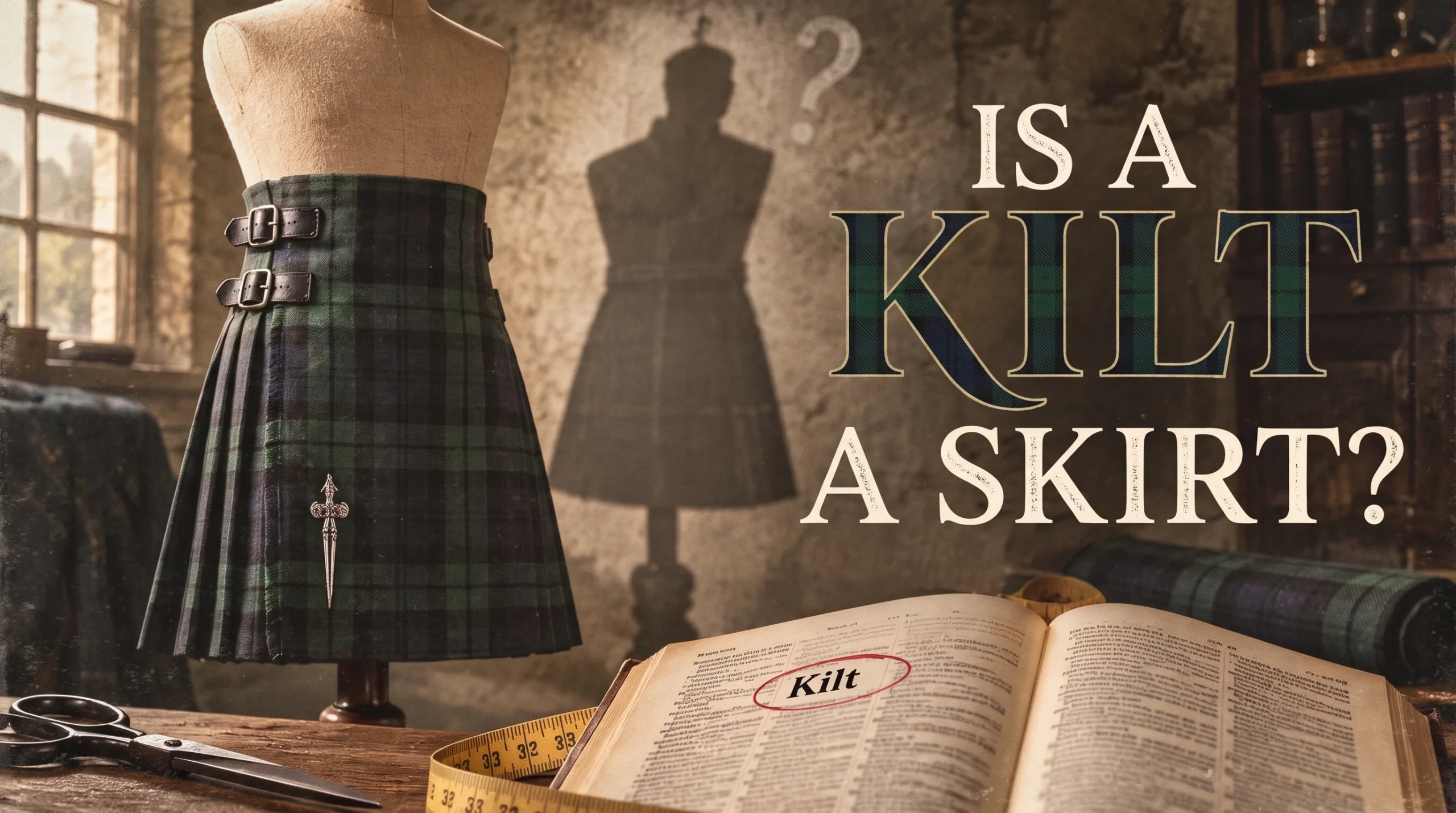
The mix-up comes from looks. From a distance both hang from the waist and stop around the knee. Up close, and especially in Scotland, they’re two separate things, and calling a kilt a skirt is a quick way to annoy the person wearing it.
Table of contents
What the Dictionaries Say
If you look the word up, you’ll find the skirt comparison straight away. Merriam-Webster defines a kilt as a knee-length pleated skirt, usually of tartan, worn by men in Scotland. The Oxford Learner’s and Britannica dictionaries say much the same.
That’s a short description for people who have never seen one, not a ruling on what a kilt is. Dictionaries describe things by comparing them to something familiar, and most readers know what a skirt looks like. The same entries go on to say it’s worn by men and tied to Scotland, which already tells you it isn’t an ordinary skirt.
The word itself has nothing to do with skirts either. “Kilt” comes from an old Scots verb meaning to tuck your clothes up around the body, and it goes back to the Old Norse kjalta, a lap or fold of cloth. There’s more on that in our guide to the kilt’s meaning and word history.
How a Kilt Is Made Differently
The real difference is in how a kilt is built. Here’s what sets it apart.
It wraps, it doesn’t pull on. A kilt is one long length of cloth wrapped around the body, starting at one side, crossing the front, going round the back and crossing the front again. A skirt is usually sewn into a tube.
The front is flat, the back is pleated. The two layers that overlap at the front are called aprons, and they stay flat. All the pleats sit around the sides and back. A typical adult kilt has somewhere between 25 and 34 of them, depending on your size. Most pleated skirts are pleated all the way round.
It uses a lot of fabric. A traditional kilt takes around six to eight yards of single-width tartan, which is why it’s heavy and swings when you walk. Few skirts use anything close to that.
It sits higher. A kilt is worn at the natural waist, between your lowest rib and your hip bone, and the hem falls to the middle of the knee. Skirts sit wherever fashion puts them.
It fastens with straps and buckles. Most kilts have two or three leather straps with buckles, one or two on the waist and one on the hip. There’s no zip. A kilt pin goes through the outer apron only, to add weight and stop it flapping, not to hold the kilt shut.
It’s made to your measurements. A good kilt is cut to your waist, hip and drop (the length from waist to knee), so it fits like tailoring rather than a dress size. Our kilt size guide shows where to measure.
The tartan has to line up. Kiltmakers carry the pattern through the pleats so the back and front read as the same tartan. That takes skill and time, and it’s one reason a well-made kilt costs more than a skirt in the same cloth.
And then there’s what goes with it. A kilt is the centre of Highland dress: a sporran at the front because the kilt has no pockets, kilt hose and flashes, ghillie brogues and often a jacket. You wouldn’t put any of that with a skirt. Our step-by-step guide on how to wear a kilt covers where each piece goes.
Traditional Tartan Kilts
These are the tartan kilts our customers choose most often.

Black Watch Custom Made Tartan Kilt-Design 3
Original price was: $149.00.$119.00Current price is: $119.00.
Premium Quality Black Watch Tartan Kilts Design 32
Original price was: $149.00.$119.00Current price is: $119.00.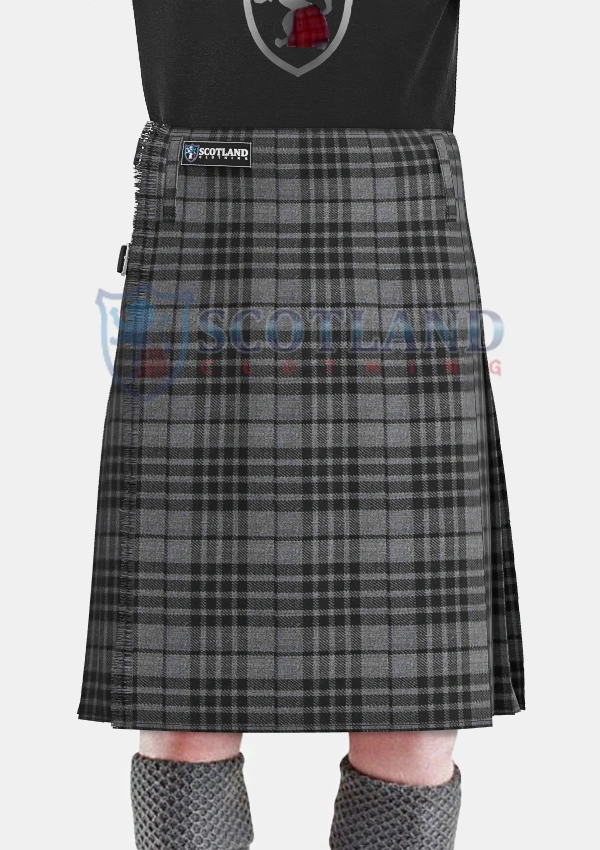
Premium Quality Grey Watch Tartan Kilt Design 5
Original price was: $549.00.$369.00Current price is: $369.00.Where the Kilt Came From
The kilt grew out of men’s working clothes in the Highlands, not out of women’s fashion.
The first version was the great kilt, or fèileadh mòr in Gaelic. It was a huge length of wool belted at the waist, with the lower half hanging like a kilt and the upper half thrown over the shoulder as a cloak or pulled over the head in bad weather. The earliest written description of it dates from 1594.
The small kilt, the fèileadh beag or “little wrap”, came later, in the late 1600s or early 1700s. It’s basically the bottom half of the great kilt, and it’s the shape we wear today. A popular story credits an English ironmaster called Thomas Rawlinson with inventing it in the 1720s for his Highland workers. Historians still argue about that, because a picture from 1692 already seems to show a man in a small kilt.
After the Jacobite rising, the Dress Act made Highland dress, including the kilt, illegal for men and boys in the Highlands from 1 August 1746. Soldiers in the Highland regiments were exempt, and the ban wasn’t lifted until 1782. A garment the government banned to break the clans was never thought of as a skirt. It was a symbol of who those men were, which is why Scottish men still wear kilts with so much pride.
Why People Still Call It a Skirt
Mostly, it’s the outline. In many countries men don’t wear anything that hangs from the waist, so anything that does gets filed under “skirt”. People who’ve never seen a kilt up close don’t notice the apron, the pleats or the straps.
Sometimes it’s a joke, and plenty of kilt wearers have heard it a hundred times. Sometimes it’s honest confusion, especially as fashion brands sell “kilt skirts” for women that copy the look without the wrap, the heavy cloth or the buckles.
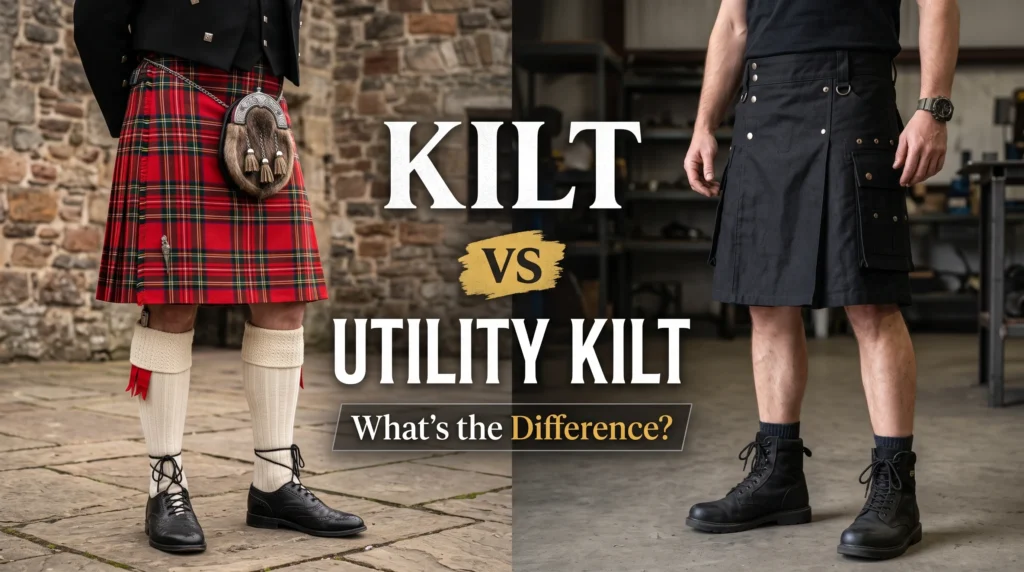
Modern kilts add to the blur. A utility kilt in cotton or canvas, with cargo pockets and snaps, looks less traditional, but it still keeps the kilt shape: flat front, pleated back, worn at the waist by men.
The simple rule is this: if it’s built as a wrap with a flat apron and pleated back and worn as part of men’s Highland dress, it’s a kilt. If you’re not sure, call it a kilt. Nobody wearing one will mind.
Women, Kilts and Kilted Skirts
Kilts were traditionally a men’s garment, but plenty of women wear them today, at weddings, ceilidhs, pipe bands and Highland dancing. A women’s kilt is built the same way, with the apron, pleats and straps, just cut to a woman’s measurements and often worn a little longer or shorter.
There’s also the kilted skirt, a lighter women’s skirt with kilt-style pleats and a pin. It borrows the look, and it’s a perfectly good choice for a smart outfit, but it’s usually lighter and simpler than a true kilt. If you want the real thing, look for a women’s kilt. If you just like the style, our tartan skirts are easier to wear every day.
Kilts for Women
Built like a traditional kilt and cut for women’s measurements.

Premium Quality Traditional Scottish Women Tartan Kilt Design 3
Original price was: $149.00.$119.00Current price is: $119.00.
Premium Quality Stewart Tartan Kilt Design 22
Original price was: $149.00.$119.00Current price is: $119.00.
Premium Quality Stewart Tartan Kilt Design 21
Original price was: $149.00.$119.00Current price is: $119.00.Is a Kilt a Skirt? FAQ
Why do dictionaries call a kilt a skirt? Dictionaries describe new things by comparing them to familiar ones. They call it a pleated skirt worn by men in Scotland, which explains the shape, not what the garment actually is.
What is the main difference between a kilt and a skirt? A kilt is a wrap with a flat double apron at the front and pleats only at the back and sides. It sits at the natural waist and fastens with straps and buckles. A skirt is usually a sewn tube or simple wrap with a zip or button.
Do men wear kilts or skirts? Men in Scotland and around the world wear kilts, especially for weddings, Burns Night, Highland games and other formal events. A kilt is a traditional men’s garment.
Can women wear a kilt? Yes. Women wear kilts for Highland dancing, pipe bands, weddings and ceilidhs. There are also lighter kilted skirts that copy the look.
What is worn under a kilt? That’s up to the wearer. Traditionally nothing, and some still keep to that, but most people today wear shorts or underwear, especially for sport and dancing.
Ready to find your kilt? Browse our tartan kilts or look up your family colours with the tartan finder.