How Long Should a Kilt Be? Kilt Length Guide

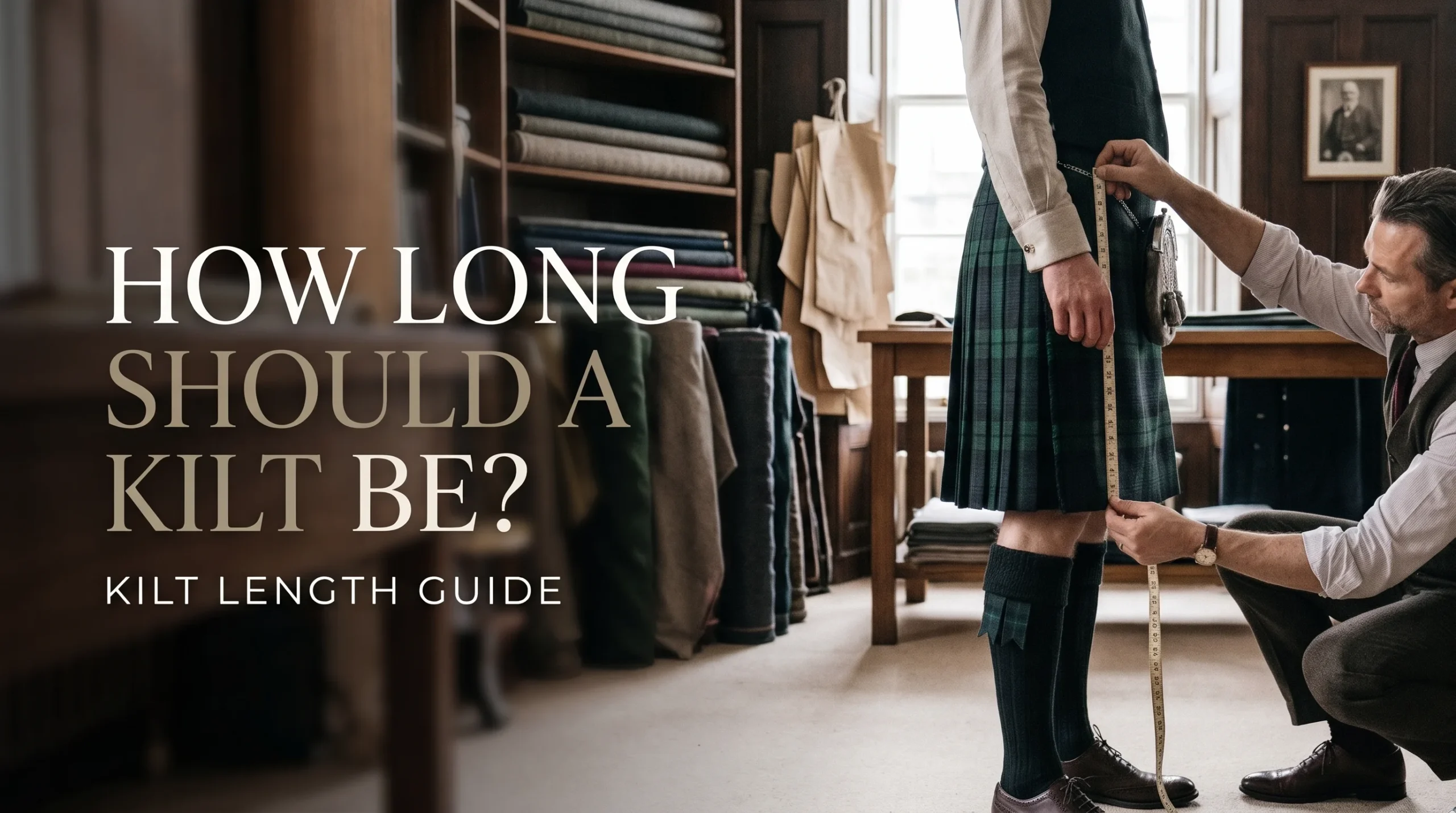
The easy way to get that length is to kneel upright on a hard floor and measure from where the kilt will sit (usually your navel) down to the floor. A kilt cut to that number will just brush the floor when you kneel and finish at mid-knee when you stand.
Table of contents
Where Should a Kilt End?
Most kiltmakers agree on a small zone: from the top of the kneecap down to its middle. Lochcarron, one of Scotland’s big tartan weavers, measures to the middle of the kneecap. Other makers aim for the bottom edge to sit on or just over the top of the kneecap, so it rests in the crease at the back of your knee.
Either is right. What you want to avoid is a kilt that covers the whole knee or hangs below it. That looks heavy, it makes your legs look shorter, and it starts to look more like a skirt than a kilt.
Don’t go too far the other way either. Clan Strachan’s measuring advice is that a kilt worn high on the knee should be no more than 1 to 1.5 inches shorter than your mid-knee length.
Fashions have moved a little over the years. In the early 1900s kilts were often worn just above the knee. They crept longer from the 1980s to the mid-knee length most people wear today. If you look at old photos of Highland dress, you’ll see more knee than you see at a modern wedding.
A good rule when you’re standing in front of a mirror: you should still be able to see part of your kneecap.
Why the Top of the Kilt Sets the Length
Kilt length is measured from the top down, so where you wear the waist changes everything. A traditional kilt sits high, at your navel or an inch or two above it. That’s well above where most men wear jeans. If you measure from your jeans line, you’ll order a kilt that ends up too long once you wear it properly.
Because it sits higher, your kilt waist size is often bigger than your trouser size too. Kinnaird Bagpipes gives the example of a man with a 36-inch trouser waist needing a 37 to 38-inch kilt.
A few things can push the waist a bit higher or lower:
Your jacket. A short jacket like the Prince Charlie shows the top of the kilt, so the kilt should sit high. Kilt Society suggests a kilt an inch or two longer if you plan to wear one, because you’ll wear it higher.
Your build. If you carry weight at the front, the cloth has further to travel over your stomach, so you may need a slightly longer kilt to reach the same spot on your knee.
The rise. The rise is the part of the kilt above the line of the buckles. On most kilts it’s 1 to 1.5 inches, and dancers’ and military kilts can have 2 inches. It’s already counted in the total length, so you don’t add it yourself.
Once your waist height is set, the kilt belt goes over the waistband and the sporran hangs about a hand’s width below it, just as when you’re putting on a kilt for a formal day.
How to Measure Kilt Length
Ask someone to help. Measuring yourself while trying to stand straight almost always gives a wrong number. Wear thin clothes or shorts, take your shoes off and measure twice.
The kneeling method (best). Kneel upright on a hard floor with your back straight. Don’t look down, because bending your head changes the number. Your helper measures from where the top of the kilt will sit, usually the navel, straight down to the floor. That’s your kilt length.
The standing method. Stand tall and face forward. Your helper puts the end of the tape at your kilt waist height on your side and runs it down the side of your leg to the middle of your kneecap. The number at the kneecap is your length.
The towel test. If you have no helper, fold a bath towel lengthways to about 24 inches, wrap it round you at kilt height and look in a full-length mirror. Fold or unfold it an inch at a time until the bottom edge hits where you want it, then measure the towel. It’s a good way to see what a length looks like before you order.
Our kilt size guide shows the waist and hip measurements to take at the same time, so you can order a made-to-measure kilt in one go.
Typical Kilt Length by Height
Height is only a rough guide, because two men of the same height can have very different leg and body lengths. Still, it’s a useful check that your measurement makes sense. These are the expected lengths from Kilt Society’s measuring chart, for a standard kilt worn at the navel to mid-knee:
- 5’6″ to 5’7″: 22 to 22.5 inches
- 5’8″ to 5’9″: 23 to 23.5 inches
- 5’10” to 5’11”: 24 to 24.5 inches
- 6’0″ to 6’2″: 24.5 to 25.5 inches
- 6’3″ to 6’4″: 26 to 26.5 inches
- 6’5″ to 6’7″: 27 to 27.5 inches
If your kneeling measurement is more than an inch away from your row, measure again. Half an inch either way is normal and you won’t see it once the kilt is on.
Tartan Kilts Made to Your Length
These are the tartan kilts our customers pick most often.

Black Watch Custom Made Tartan Kilt-Design 3
Original price was: $149.00.$119.00Current price is: $119.00.
Premium Quality Black Watch Tartan Kilts Design 32
Original price was: $149.00.$119.00Current price is: $119.00.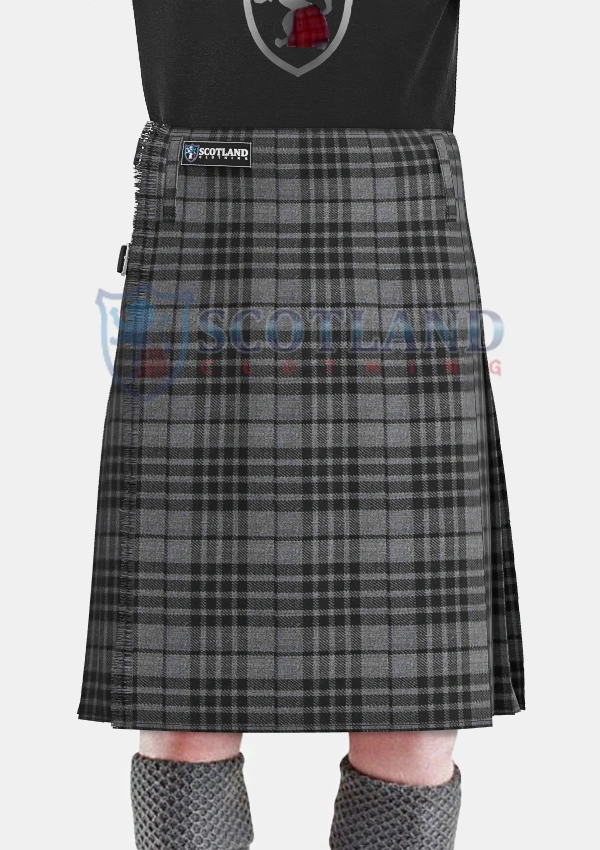
Premium Quality Grey Watch Tartan Kilt Design 5
Original price was: $549.00.$369.00Current price is: $369.00.Length for Different Kilts and Wearers
Formal and wedding kilts. Mid-knee is the safe choice for a traditional 8-yard wool kilt. Heavy 16 oz cloth swings when you walk, so on wool kilts an extra inch of length shows more than you’d expect.
Military and pipe band kilts. These are worn a little shorter, to the top of the kneecap. If your band has a dress code, follow it, because many set the exact length.
Highland dancers. Dancers’ kilts are usually made from lighter tartan fabric, about 10 to 11 oz, and often have a deeper 2-inch rise. Measure them to the knee the same way.
Utility and casual kilts. Utility kilts are usually worn lower, on the hips like jeans. Measure from wherever the top will actually sit, then down to mid-knee. The finish line is the same, but the number will often be shorter than a traditional kilt. The way they’re cut is one of the main differences between a kilt and a utility kilt.
Women’s kilts and kilted skirts. A traditional women’s kilt usually reaches the knee, measured the same way. Mini kilts are shorter. USA Kilts suggests ending about 3 inches above the knee and warns that much shorter can be revealing when you bend. Tartan skirts come in many lengths, so pick what suits the occasion.
Getting the Hose Right
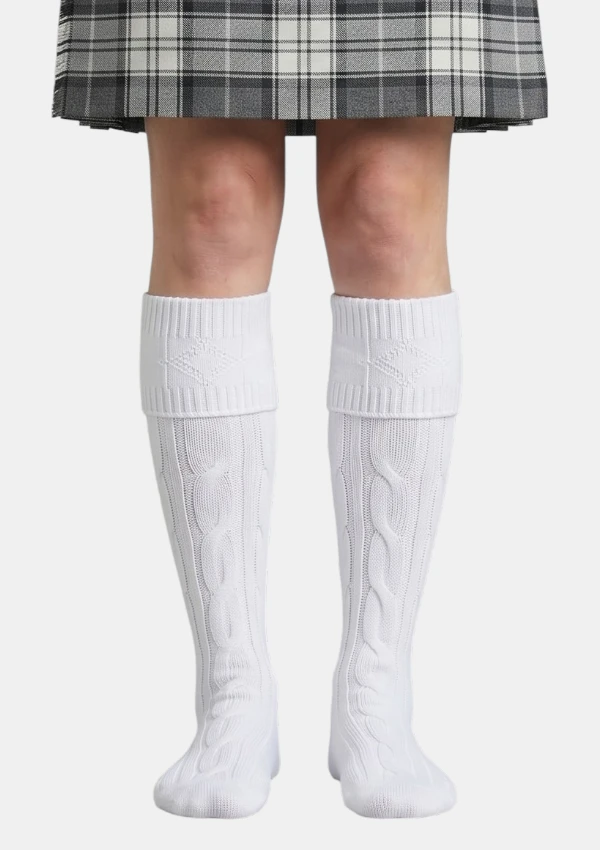
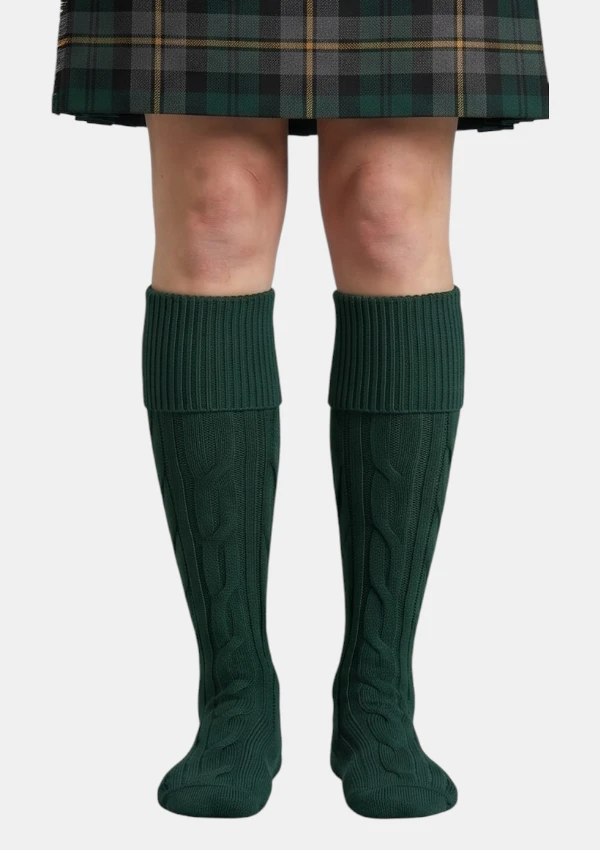
Kilt length and hose length work together. The top of your kilt hose should fold over about two or three fingers’ width below the knee. That leaves a band of bare knee between the hem of the kilt and the top of the hose.
If you pull your hose right up to the knee, a perfectly cut kilt will look too long, because the gap disappears. Pull them too low and the outfit looks unfinished. Garter flashes sit just under the fold on the outside of each leg.
Kilt Hose and Socks
Hose that fold over at the right height make a well-cut kilt look right.

Kilt Too Long or Too Short?
First, check where you’re wearing it. A kilt that looks too long is often just sitting too low. Lift it up to your navel, do up the straps and look again. Raising the waist an inch shortens the kilt by an inch at the knee.
If it’s still too long at the navel, you can wear it an inch or so higher, but don’t go much further. A kilt hitched up towards your ribs looks odd and feels worse.
A kilt that’s too short is harder. You can wear it a little lower, but not by much, because a traditional kilt is shaped to sit at the natural waist. If it’s well above the knee, it’s not the right kilt for you.
Changing the length isn’t a simple job on a traditional kilt. The bottom edge is the finished edge of the cloth, not a sewn hem, and every pleat is stitched, so take it to a kiltmaker rather than a general tailor. Casual and utility kilts with a sewn hem are easier to alter.
The best fix is to measure properly before you buy. If you’re unsure about anything, our FAQs page answers the usual questions on orders and sizing. You’ll find the full range of styles in our tartan kilts.
Kilt Length FAQ
How do I measure for kilt length? Kneel upright on a hard floor with your back straight and have someone measure from where the kilt will sit, usually the navel, down to the floor. That number is your kilt length.
What is the average kilt length for a man? About 24 inches for a man around 5 feet 10 or 11. Typical lengths run from about 22 inches at 5 feet 6 to about 27.5 inches at 6 feet 7.
Should a kilt cover the knee? No. It should cover the top of the knee down to about the middle of the kneecap, so part of the kneecap still shows.
Where should a kilt sit on the waist? A traditional kilt sits at the navel or an inch or two above it, which is higher than trousers. Utility and casual kilts are often worn lower, on the hips.
Should a kilt touch the floor when you kneel? Yes. A kilt of the right length just brushes the floor when you kneel upright. That’s why the kneeling method is the easiest way to measure.
Ready to find your kilt? Browse our tartan kilts or find your family colours with the tartan finder.